

job: DSP programming, software, prototype PCB
client: TEILE Elektronik
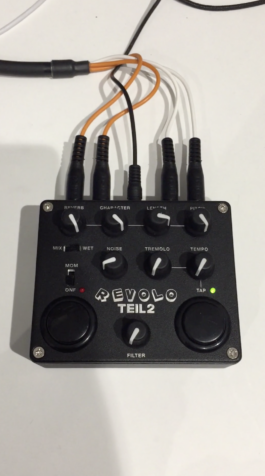
The Revolo is more than just a piece of hardware; it is a meticulous intersection of high-fidelity analog circuitry and advanced digital signal processing, designed for those who refuse to compromise on sound quality, whether on the club stage or in the experimental studio. As the lead firmware engineer behind the Revolo, I had the privilege of shaping the "brain" of this machine, working in close collaboration with Gregor Sütterlin (Rampa) and Benjamin Hughes from TEILE Elektronik to ensure that the interface and the sonic character met the exacting standards of professional production.
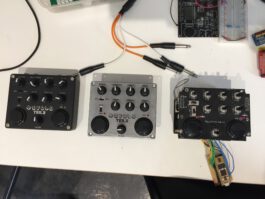
The core design philosophy of the Revolo was to bring the vast, sweeping soundscapes usually reserved for powerful desktop-based studio environments into a compact, touring-ready unit.
The original Reverb algorithm, designed by Valdemar Orn, is a masterpiece of spatial depth, but it was never intended to run on the constrained resources of an embedded microcontroller. My initial R&D phase involved rigorous experimentation with various platforms, including the ESP32 and STM32 series, to determine the necessary computational overhead required to maintain low-latency, high-fidelity processing.
To make this portable, I undertook a complete architectural port. I re-implemented Orn’s original algorithm, then developed an "ECO" iteration. This specialized version maintains the lush, ethereal character of the original while optimizing the delay line density and streamlining the filter signal chain. This allows the Revolo to provide a large, airy soundscape that sits perfectly above a mix without the "mud" often introduced by inferior digital reverbs.
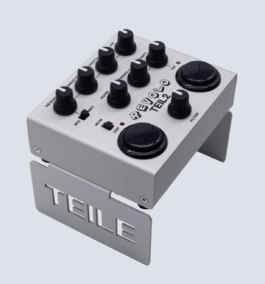
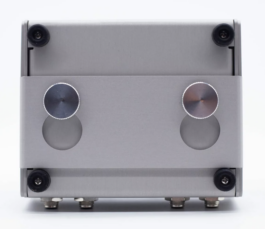
A primary design goal for the TEILE team was to ensure that the analog signal path remained pristine. We adopted a design where only the wet signal is processed within the DSP environment. By keeping the dry signal entirely in the analog domain and bypassing unnecessary conversions, we preserved the harmonic integrity of the source audio. When digital processing is required, we utilized high-performance 24-bit converters, ensuring that the transition between analog and digital remains transparent and noise-free.
Technical specs mean little without musicality. Tuning the Revolo was an iterative process of real-world testing. Collaborating with Rampa, we mapped the interface parameters to feel intuitive during the heat of a DJ set. We focused on how the reverb tail interacts with the Tremolo circuit—a combination that allows for everything from subtle, rhythmic pulses to deep, dynamic textures that breathe with the music.
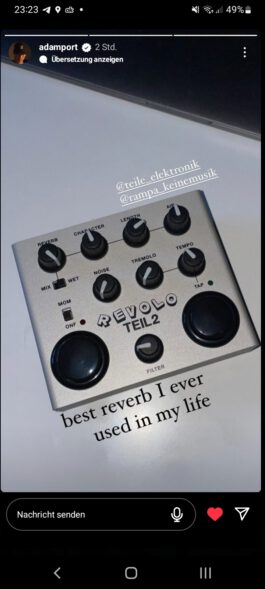


Track: as//is - Mess I Made
While the Revolo was optimized for the rigors of touring DJs, its utility extends far beyond the booth. For me, this device has become an indispensable part of my personal workflow. Whether I am running my saxophone through it—where it provides a sense of space and presence that makes a dry, sterile room feel like a concert hall—or utilizing it as a texture generator for my experimental electronic project, SIRIUS, it has fundamentally changed how I approach my instrument.
The Revolo is designed to inspire. It encourages the user to reach for the knobs, to push the feedback, and to turn a static sound into a living, evolving performance. It is a tool for those who want their reverb to be an instrument, not just an effect.

© 2026